

Is Martial Arts Effective in a Real Fight? Watch This First.
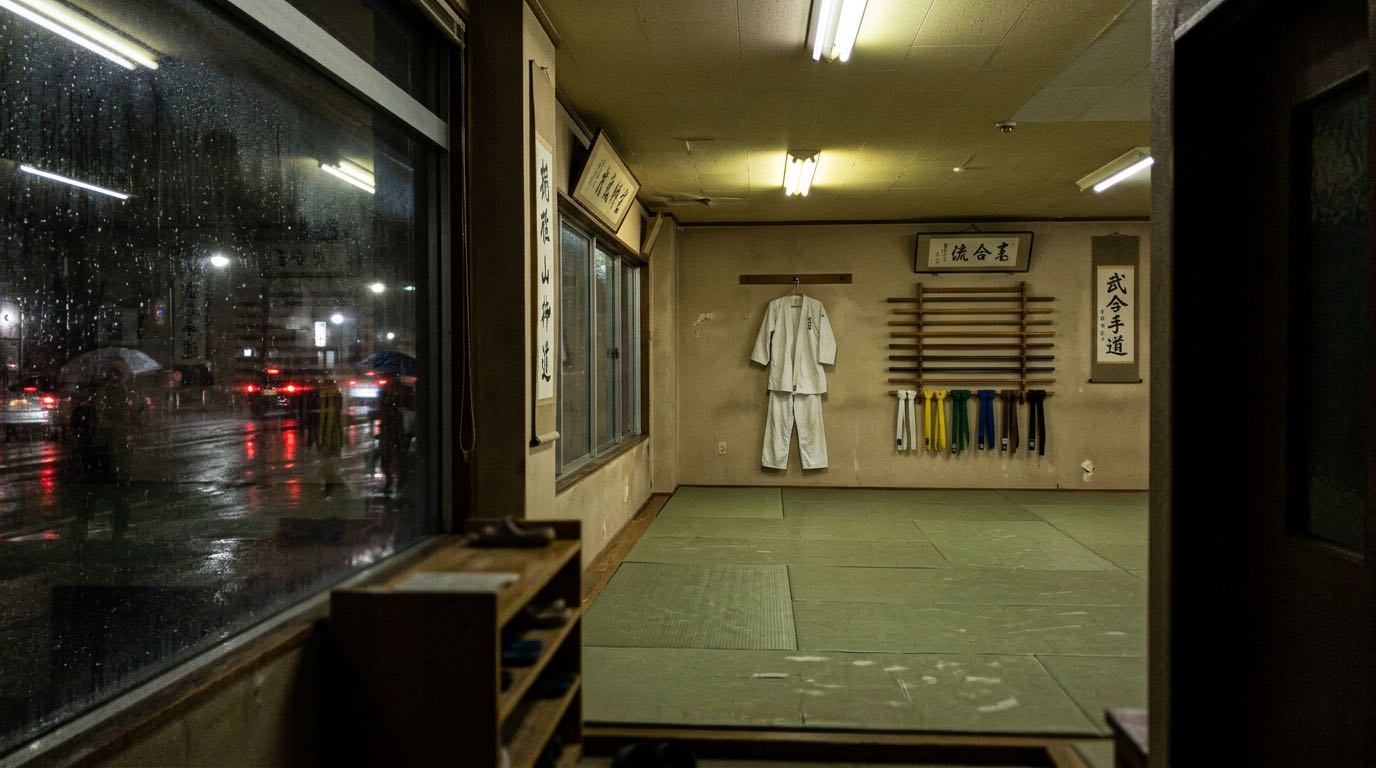
The dojo is quiet. Controlled. The mats are clean, the lights are bright, and everyone follows the rules. Then the doors close, you step outside, and reality hits you like a freight train.
I spent years in combat zones. I've trained federal law enforcement agencies, intelligence operatives, and everyday people who just want to make it home safe. And here's what I learned: most martial arts training creates a dangerous gap between what you practice and what you face when violence actually happens.
That doesn't mean martial arts are useless. It means we need to talk honestly about what works, what doesn't, and why the difference matters when your life is on the line.
The McGregor Bus Attack: When Elite Training Meets Real Violence
April 5, 2018. Conor McGregor,one of the most decorated UFC fighters on the planet,stormed the Barclays Center in Brooklyn with 20 members of his entourage. They weren't there to compete in a sanctioned bout. They were there for revenge.
McGregor hurled a metal dolly through a bus window, shattering glass and injuring multiple fighters inside. UFC fighter Michael Chiesa suffered a lacerated eyebrow from flying debris. Ray Borg was also hurt. The chaos was captured on video, showing elite combat athletes reduced to covering their faces from flying glass and metal.
Here's the uncomfortable truth: McGregor had every physical skill needed to dominate a fight. World-class striking. Lightning-fast reflexes. Years of high-level competition. But none of that stopped him from choosing mob violence over controlled combat. None of it protected the fighters trapped inside the bus from injury.
Real violence doesn't care about your belt rank. It doesn't wait for you to bow in. And it sure as hell doesn't follow the Marquess of Queensberry rules.
The Sport vs. Combat Problem
Most martial arts today are built around competition. That's not a weakness,it's actually a massive strength for skill development. You get live resistance, immediate feedback, and measurable progress. But competition has boundaries. Real violence doesn't.
In the ring, you face one opponent. You know roughly when the fight starts. There's a referee. There are rules about what you can't do. You're both wearing approved gear. The environment is controlled.
In real violence, you might face multiple attackers. You might not see the first punch coming. There's no timeout. No illegal moves. The guy attacking you isn't thinking about points,he's thinking about ending you.
I've seen people freeze when violence erupts because nothing in their training prepared them for chaos. The controlled environment of the dojo becomes a liability when reality hits.
That gap between sport and survival is where people get hurt.
What Actually Happens in Real Fights
I've debriefed hundreds of real encounters. Here's what they look like:
They're fast. Most altercations are over in seconds. You don't have time to assess your opponent's stance or plan a strategy. You react or you don't.
They're chaotic. Adrenaline floods your system. Fine motor skills disappear. Your vision narrows. Your brain screams at you to run. Everything you practiced in a calm, controlled environment gets harder to access.
They're unfair. The person attacking you doesn't care about honor. They might have a weapon. They might have friends. They definitely didn't tap you on the shoulder and challenge you to a fair fight.
They're unpredictable. You're not facing a trained opponent throwing textbook techniques. You're facing someone driven by rage, desperation, or predatory intent. Their movements don't follow patterns you drilled for thousands of reps.
Traditional martial arts training struggles with all of this because it's built around predictability. You practice defense against specific attacks thrown in specific ways. Your training partner telegraphs their moves. Everyone stops when someone gets hurt.
Real violence has none of those safety valves.
The Deescalation Factor
Here's something most martial arts schools won't teach you: the best fight is the one you never have.
I ran a training program for a major shopping mall in a city with two homeless shelters within a block and a half of the main entrance. Security there dealt with about 450 violent incidents per year. Every. Single. Year.
After we implemented a science-based deescalation program,teaching security how to assess threats, build rapport, and redirect aggression,those numbers dropped. Within a year and a half, they went from 450 violent encounters to under 280. This year, they're on track for 250.
That's a third fewer fights. Not because security got better at throwing punches,because they got better at preventing the situation from escalating to violence in the first place.
The timid guy who didn't like confrontation? Once he learned the steps, he could deescalate situations better than the guy who thought he was a smooth talker. That person who feels like they don't have control in a chaotic situation,give them a framework and they'll defuse it.
Most traditional martial arts don't teach this. They teach you what to do AFTER violence starts. But if you can recognize the signs of an impending attack and interrupt the cycle before fists start flying, you've already won.
So What DOES Work?
Let's be clear: training matters. The right kind of training can absolutely save your life. But it needs to address reality, not idealized versions of combat.

Functional martial arts with live resistance. Boxing, Muay Thai, wrestling, jiu-jitsu,these work because you're actually fighting. You're learning to function under pressure against someone who's genuinely trying to hit you or submit you. That stress inoculation matters.
Scenario-based training. You need to practice in environments that mirror reality. Low light. Confined spaces. Multiple opponents. Verbal escalation. Surprise attacks. Your body needs to learn how to respond when adrenaline is spiking and your brain is screaming.
Threat assessment and awareness. Before you ever throw a punch, you need to recognize danger. Is the environment safe? Are there exit routes? Is this person alone? What's in their hands? Most people miss these signals until it's too late.
Deescalation skills. You need to know how to talk someone down. How to position yourself safely. How to create distance. How to de-escalate without submitting or showing weakness. This isn't soft,it's tactical.
Simple, gross motor skills under stress. Complex techniques fall apart when adrenaline hits. You need a small toolbox of reliable, high-percentage moves you can execute even when your brain is flooded with cortisol.
The best training programs combine all of this. They teach you to fight, but they also teach you when NOT to fight and how to recognize the difference.
The Psychological Reality
Here's what nobody talks about: most people aren't psychologically prepared for real violence.
You can drill techniques for years. You can spar hard. You can earn belts and trophies. But the first time someone attacks you with genuine intent to harm, your body and brain react in ways you can't predict.
Some people freeze. Some people fight back. Some people fold. You don't really know until it happens.
This is why scenario training matters. You need to experience that adrenaline dump in a controlled environment. You need to feel what it's like when someone is actually trying to hurt you,not playing by rules, not pulling punches, but bringing real aggression.
The best martial arts training builds this psychological resilience. The worst martial arts training gives you false confidence that crumbles the first time reality hits.
Common Martial Arts Myths That Get People Hurt
Myth: "My black belt means I can defend myself." A black belt means you've mastered your art's curriculum. It doesn't mean you're prepared for chaos. I've seen black belts freeze when confronted by real aggression because nothing in their training prepared them for it.
Myth: "Street fights are just like sparring." They're not even close. Sparring has rules, safety gear, and mutual respect. Street fights have none of that. The psychological and tactical differences are enormous.
Myth: "I'll just rely on muscle memory." Muscle memory works when the stimulus matches what you trained. When someone attacks you in a way you've never practiced defending, that muscle memory is useless.
Myth: "I can take on multiple attackers." Maybe in a movie. In reality, fighting multiple opponents simultaneously is almost impossible. Your best bet is creating distance and escaping. Anyone who tells you otherwise is selling fantasy.
Myth: "Traditional techniques are battle-tested." Some are. Many aren't. A lot of traditional martial arts evolved in contexts that no longer exist or were always more about cultural practice than combat effectiveness. Respect the tradition, but test everything.
What Research Actually Shows
We're not just relying on anecdotes here. Academic research backs up what operators have known for decades: context matters more than style.
Studies on violence across different populations (bouncers, law enforcement, security personnel) consistently show that deescalation training reduces injury rates for both defenders and attackers. A comprehensive review of real-world altercations found that physical skills alone account for less than 40% of successful outcomes in civilian self-defense situations.
What makes up the other 60%? Threat recognition. Situational awareness. Verbal skills. Decision-making under pressure. All the stuff most traditional martial arts schools don't teach.
Research on stress performance shows that complex motor skills deteriorate rapidly under adrenal stress. That beautiful armbar you drilled a thousand times? When your heart rate spikes above 145 BPM, your fine motor control disappears. You revert to gross motor patterns,the simplest, most reflexive movements your body knows.
This is why training needs to be simple, brutal, and pressure-tested. Fancy doesn't work when you're terrified.
The Training Environment Matters
I've taught in dojos with perfectly maintained mats, climate control, and mirrors on every wall. I've also taught in parking lots at 3 AM, in stairwells, in confined spaces with bad lighting and uneven surfaces.
Guess which environment better prepares you for real violence?
Your training space shapes your expectations. If you only train on soft mats in good lighting with clear boundaries, your brain builds a map of combat that looks like that. When violence erupts in a crowded bar with wet floors and people bumping into you, that map is useless.
The best self-defense training happens in varied environments. You need to practice in low light. In tight spaces. On concrete. Around obstacles. With distractions and noise. Your body needs to learn that fighting isn't clean and controlled,it's messy and chaotic.
This doesn't mean traditional training spaces are worthless. They're great for skill development. But if that's ALL you train in, you're building a dangerous false sense of preparedness.
The Legal Reality Nobody Talks About
Here's a fun question martial arts schools don't like to address: What happens AFTER you defend yourself?

Let's say your training works perfectly. Someone attacks you, you defend yourself effectively, and the attacker ends up injured. Now what?
Now you're potentially facing criminal charges. Civil lawsuits. Legal fees that could bankrupt you. Even if you're 100% justified, you're going to spend months, maybe years, dealing with the legal aftermath.
Real self-defense training addresses this. It teaches you:
- When force is legally justified
- What level of force is proportional to the threat
- How to articulate your actions to law enforcement
- Why witness statements and evidence matter
- What happens in the hours and days after an incident
Most traditional martial arts ignore all of this. They teach you how to hit, not how to navigate the complex legal and psychological aftermath of violence.
That's a massive gap.
The Verdict: Are Martial Arts Effective?
Yes. And no. It depends entirely on what you're training and how you're training it.
If you're training a sport-focused martial art and you think that automatically translates to real-world self-defense, you're setting yourself up for a dangerous surprise. If you're training in a reality-based system that addresses threat awareness, deescalation, psychology, and functional skills under stress, then yes,martial arts can absolutely be effective.
The key is knowing the difference.
I've trained guys who can throw perfect spinning kicks but freeze when someone gets in their face. I've also trained people who weren't athletic, weren't aggressive, and didn't have any martial arts background,but after learning threat assessment and deescalation, they could defuse violent situations before they started.
Who's more effective in a real confrontation? The guy with the flashy techniques or the person who never needed to use them?
What You Should Do
If you're serious about self-defense, here's my recommendation:
Train a functional martial art. Pick something with live resistance. Boxing, Muay Thai, wrestling, Brazilian jiu-jitsu, or MMA. Get comfortable with actual combat pressure.
Add reality-based self-defense. Find a program that teaches threat awareness, deescalation, legal considerations, and scenario training. You need context, not just techniques.
Pressure-test everything. If you can't make it work when someone's resisting at full speed, it won't work when you're terrified and flooded with adrenaline.
Study violence. Read accounts of real encounters. Watch videos (not Hollywood,actual security footage and incident reports). Understand what real attacks look like so you can recognize the signs.
Train your mind. Physical skills are half the equation. You need to build psychological resilience, decision-making under stress, and the willingness to act when it matters.
And most importantly: be honest with yourself about your training. If your martial art is making you feel invincible, that's a red flag. Real self-defense creates capable, aware people who understand their limitations and prioritize avoidance over confrontation.
The Training Mindset That Actually Works
After training thousands of people across federal agencies, law enforcement, civilians, and everyone in between, I've identified what separates people who can actually defend themselves from people who just think they can.
It's not physical ability. I've seen small, non-athletic people successfully defend themselves while bigger, stronger martial artists failed.
It's not belt rank. Some of the most effective people I've trained had zero martial arts background when they started.
It's mindset.
Effective self-defense requires you to accept uncomfortable truths:
You can't control what happens to you, but you can control how you respond. Violence is random. You might do everything right and still get attacked. That's not a reason to give up,it's a reason to train smarter.
Awareness beats technique 99% of the time. If you see danger coming and avoid it, you win. No punches needed. The most sophisticated fighting skills in the world can't save you if you walk into an ambush.
There are no guaranteed winners. Anyone who tells you their system "always works" is lying. Real violence has too many variables. The best you can do is stack probabilities in your favor.
Your ego is your biggest liability. The need to prove yourself, to stand your ground, to win the confrontation,that's what gets people killed. Smart operators prioritize survival over pride.
When you embrace these truths, your training changes. You stop collecting techniques like trophies and start building functional skills that actually work when it matters.
Final Thoughts
I love martial arts. I've dedicated my life to studying violence and how to survive it. But I've seen too many people with impressive credentials get hurt because their training didn't match reality.
The dojo is a beautiful place. It's where we refine skills, build discipline, and push our limits. But it's not the street. It's not a parking lot at 2 AM. It's not what happens when someone decides you're their target.
Train hard. Train smart. And never confuse competence in the gym with guaranteed safety in the real world.
Because when violence happens, it doesn't care about your belt, your trophies, or how many hours you spent on the mats. It only cares about one thing: are you ready for reality?
The answer to "is martial arts effective in a real fight" isn't yes or no. It's "it depends on what you're training and why." If you're training for sport, embrace that. If you're training for self-defense, make sure your program addresses the full spectrum,awareness, deescalation, legal considerations, psychological preparation, and functional skills under realistic stress.
Anything less is just cosplay.
Stay ready. Stay aware. And remember,the best fight is the one you never have.
Related Articles: