

7 Warning Signs Someone Is About to Attack You
I've seen it happen more times than I can count. Someone gets sucker-punched, blindsided, ambushed... and afterward they say, "I never saw it coming."
But here's the thing... they could have. Every single time.
As a Special Forces and Close Protection Operator who served in a Tier 1 unit, I've spent 24+ years reading people in the most dangerous environments on earth. Close protection in conflict zones, bouncing at rough bars, combat operations where reading the wrong body language meant someone died.
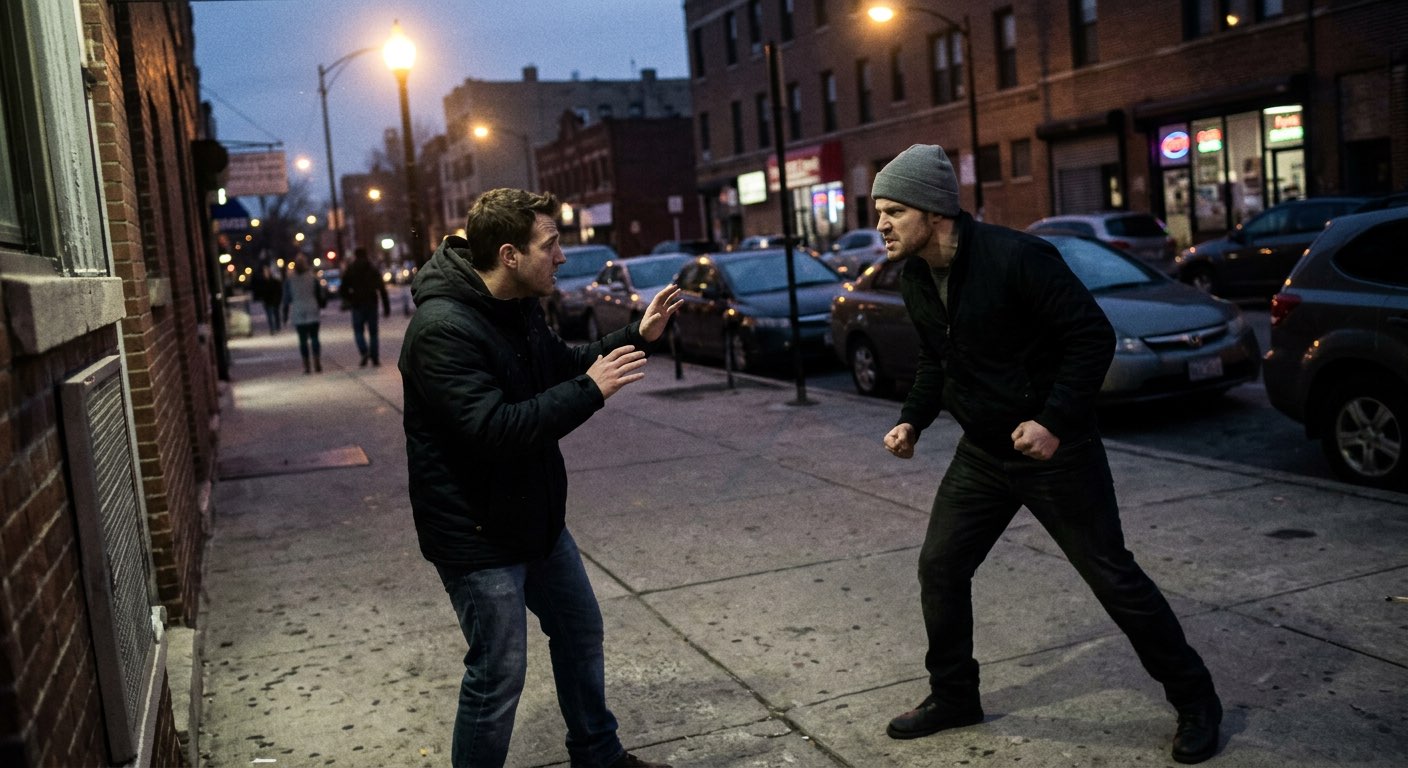
And I can tell you: attackers almost always telegraph what they're about to do. There are specific, observable pre-attack indicators that trained operators recognize instantly. Once you know what to look for, you'll never be caught off guard again.
What You'll Learn
- Why Most People Miss the Warning Signs
- The Body Tells the Truth Before the Fists Fly
- The 7 Pre-Attack Indicators Operators Watch For
- Real Cases Where Pre-Attack Indicators Were Visible
- The 90-Degree Rule: How to Spot a Weapon Draw
- Situational Awareness: The Real First Line of Defense
- What to Do When You Spot Pre-Attack Indicators
- Expert Verdict
- Frequently Asked Questions
Why Most People Miss the Warning Signs
Most people walk through life in what we call Condition White in close protection... zero awareness, completely absorbed in their own world. Face buried in their phone, earbuds in, no awareness of the humans around them.
They're not looking for the signs because nobody taught them what to look for.
Traditional martial arts don't teach this. Neither do most self-defense classes. They teach you AFTER the attack starts. They teach you techniques to defend yourself once the fists are already flying.
But the real skill... the one that keeps you safe... is recognizing violence BEFORE it starts. When you still have options. When you can create distance, avoid the confrontation entirely, or at minimum, not be surprised when it happens.
According to FBI Behavioral Analysis Unit research, most violent attacks are preceded by observable behavioral cues. These aren't subtle psychological insights... they're physical, visible changes in body posture, facial expression, and movement patterns.
The problem isn't that the signs aren't there. The problem is that nobody's watching.
The Body Tells the Truth Before the Fists Fly
Your attacker's body betrays his intentions every single time. He can't help it. It's biology.
When the brain makes the decision to commit violence, the body prepares. Adrenaline floods the system. Muscles tense. The sympathetic nervous system kicks in. And all of this is visible if you know what to watch for.
"The ability to remain in good proximity and away from a threat is far removed when you're in densely populated areas. You can't always maintain safe distance. So you need a different plan... and that plan starts with reading the person in front of you."
The real advantage isn't being the toughest guy in the room. It's being the most AWARE guy in the room. The one who sees the threat forming before it materializes. The one who has time to act instead of react.
The 7 Pre-Attack Indicators Operators Watch For
These are the indicators I was trained to watch for in close protection, the same ones law enforcement officers are taught, the same ones that have kept me alive in hundreds of real encounters across multiple combat deployments and civilian altercations.
1. The Jaw Set
When someone is about to commit violence, their jaw muscles tighten visibly. The teeth clench. The masseter muscle bulges along the jawline. This is an involuntary response... the body bracing for impact, both giving and receiving.
You'll see this in surveillance footage all the time. Right before the punch is thrown, the attacker's jaw locks up. It's one of the most reliable indicators because it's nearly impossible to fake or suppress when the decision to attack has been made.
2. Fist Clenching
Watch the hands. Always watch the hands. When fingers curl into fists, especially repeatedly (clench, release, clench), the body is preparing to strike. This is adrenaline starting to flow.
According to Police1 research on pre-attack behavior, fist-making is one of the top 10 cues officers are trained to recognize during confrontations. When you see someone's hands ball into fists during a verbal argument, you're looking at someone whose body is preparing for violence whether their mouth admits it or not.
3. Target Glancing
An attacker's eyes will dart to their intended target zone... your chin, your throat, your midsection. They're unconsciously planning their first strike. If someone keeps glancing at your jaw during a tense conversation, they're measuring distance.
In close protection, we called this "target fixation." The eyes go where the strike will land. Every single time.
4. Weight Shift
Before someone throws a punch, they need to load weight onto their rear foot. Watch for a subtle shift backward... it's the coiling before the spring. If someone suddenly squares their shoulders and shifts their weight, they're getting ready.
This is biomechanics. You can't generate power without loading your weight first. When you see that weight shift, you're looking at someone who's decided to attack. You're just seeing the preparation phase before the explosion.
5. The Thousand-Yard Stare
When someone decides to attack, their eyes often go flat... the "thousand-yard stare." They're no longer seeing you as a person. They're seeing you as a target. This is a critical indicator because it means the decision to commit violence has already been made.
The emotional disconnect happens first. Then the physical attack follows. When you see someone's eyes go empty and cold during a confrontation, they've already crossed a mental threshold. You're out of time for de-escalation.
6. Grooming Behavior
Touching the face, adjusting clothing, pulling up sleeves... these "grooming" gestures are displacement behaviors. The person is managing their own anxiety before attacking. Watch for someone who suddenly starts adjusting their belt, touching their waistband, or pulling at their collar during a confrontation.
This one's interesting because it looks nervous and harmless. But it's the exact opposite. It's the body burning off excess adrenaline before the attack. Someone who's truly backing down doesn't start adjusting their clothes. Someone preparing to fight does.
7. Blading the Body
When someone turns their body at an angle to you (blading), they're unconsciously adopting a fighting stance. One foot moves back, shoulders turn... they're preparing to either attack or defend. In close protection, we call this "pre-positioning."
According to law enforcement training on pre-attack indicators, body blading is one of the most consistent cues visible in dashcam and surveillance footage seconds before an assault occurs.
"There has to be an assessment. Is that person about to commit violent acts? Is he right on the verge of violence? Look at the hands. Look at the jaw. Look at how they're standing. The body tells you everything before the first punch is thrown."
Real Cases Where Pre-Attack Indicators Were Visible
These aren't theoretical. These are real incidents where pre-attack indicators were either missed (with tragic consequences) or recognized (allowing survival or prevention).

Case 1: Miami-Dade Code Enforcement Officer Road Rage Assault (March 2026)
Dashcam footage captured a road rage attack on a Miami-Dade code enforcement officer. The video shows the attacker approaching the officer's vehicle, and analysts reviewing the footage identified at least five clear pre-attack indicators visible in the seconds before the punch was thrown:
- Chest puffed out
- Leaning in toward the officer
- Jaw jutting forward
- Body blading (turning sideways)
- Looking away momentarily before striking (target glance pattern)
The officer was struck twice and had a car door slammed on him. The entire sequence unfolded in under five seconds. But every single indicator was visible BEFORE the first punch landed. (Source: Dedicated Threat Solutions analysis)
This is the pattern you see over and over again in surveillance footage: the body telegraphs the attack before it happens. The question is whether anyone is watching.
Case 2: Georgetown Police Officer Assault (June 2024)
An Ohio patrol officer, Patrolman Rammel, was conducting a routine stop on a wanted female suspect when dashcam footage captured her attempting to punch him in the face. According to the police report, Officer Rammel had spotted pre-attack indicators and managed to evade the initial strike before backup arrived.
The suspect was charged with assault on a police officer. Training analysis of the footage later identified the classic escalation pattern: initial compliance, followed by fidgeting, arm crossing, foot position shift, then the strike attempt. (Source: Georgetown Police Department via Reddit)
This case demonstrates what happens when someone DOES recognize the indicators. The officer wasn't taken by surprise. He saw it coming and moved. That's the difference awareness makes.
Case 3: 2013 Trooper-Involved Shooting (Used in Police Training)
Dashcam footage from a 2013 traffic stop that escalated into a gunfight has been used for years in law enforcement training. Police1 analysis of the video identified at least five pre-attack indicators visible before the suspect drew his weapon and fired.
The footage is now a cornerstone of officer safety training precisely because the indicators were SO visible in hindsight, yet the situation still escalated to lethal force. It drives home the point: seeing the signs and ACTING on them are two different skills.
These real-world cases prove what operators already know: violence is almost never truly sudden. The body prepares, the stance shifts, the eyes change. The attack is coming. The only question is whether you're aware enough to see it.
The 90-Degree Rule: How to Spot a Weapon Draw
This is one of the most important things I teach, and it comes directly from close protection and combat operations:
Before someone can access a weapon, they have to show you a 90-degree bend in their arm or leg.
Think about it. To reach for a pistol on the hip, a knife in the pocket, a weapon in a boot... the arm or leg must bend to approximately 90 degrees. That's biomechanics. There's no way around it.
"How do you know if somebody's going to go for a weapon? Look for the 90-degree bend in an arm or leg. That's an indication they're going for their weapon. They have to show you the 90 before they show you the weapon. That's your opportunity to either attack or get away."
This came from my time working close protection in high-threat environments. We had to operate in densely populated areas where maintaining distance wasn't always possible. You'd be in a market, a checkpoint, a crowd... and you needed a way to identify weapon draws BEFORE the weapon appeared.
The 90-degree rule gave us that window. If someone's hands start moving toward their waistband and you see that elbow bend, you know what's coming. You don't wait to see the gun. You act when you see the reach.
According to law enforcement training research, officers trained in pre-attack indicator recognition respond significantly faster to threats than those without this training. The same applies to civilians.
The 90-degree rule works because it's universal. It doesn't matter if the weapon is a gun, a knife, a syringe, or anything else. The biomechanical requirement is the same. See the bend, recognize the threat, act immediately.
Situational Awareness: The Real First Line of Defense
Pre-attack indicators only help if you're actually paying attention. Most people walk through life in Condition White... zero awareness, completely absorbed in their own world.
The goal isn't paranoia. It's what I call relaxed alertness... Condition Yellow. You're going about your day normally, but you're aware of who's around you, what their body language says, and where your exits are.
According to Department of Justice research on assault patterns, the majority of violent attacks occur in transitional spaces... parking lots, sidewalks, entries and exits. These are the places where your awareness matters most.
Situational awareness isn't about being hyper-vigilant every second of every day. It's about understanding when and where you're most vulnerable, and adjusting your awareness level accordingly.
The Awareness Spectrum
Condition White: Oblivious. Phone out, earbuds in, no awareness of surroundings. This is where most people live. It's also where most victims come from.
Condition Yellow: Relaxed alertness. You're going about your day, but you know who's around you. You've identified exits. You're scanning for anomalies. This should be your baseline in public.
Condition Orange: Specific threat identified. Someone's body language is off. The situation feels wrong. You're now focused and preparing to act.
Condition Red: Threat is imminent or active. Pre-attack indicators are visible. You're either creating distance or preparing to defend.
The jump from White to Red gets people hurt. They go from completely unaware to suddenly under attack with no time to process or respond. When you operate in Yellow, you see the threat forming and move to Orange, giving yourself time to create distance or prepare before it hits Red.
What to Scan For
When you enter any space, do a quick mental scan:
- People: Who's here? What's their body language saying? Is anyone paying unusual attention to you or others?
- Exits: Where are your exits? If something goes wrong, where do you go?
- Anomalies: What's out of place? What doesn't fit the normal pattern of this environment?
- Cover and concealment: If violence erupts, what can you get behind?
This takes five seconds. That five-second scan is the difference between being a hard target and being easy prey.
What to Do When You Spot Pre-Attack Indicators
Once you recognize the signs, you have a window... usually 1 to 3 seconds... to act before violence starts.
Your options depend on the situation, but here's the priority hierarchy:
1. Create Distance Immediately
Every foot of space you gain is safety. If you see pre-attack indicators, your first move is to increase the distance between you and the threat. Step back. Move to the side. Put an object between you.
Distance buys you time. Time lets you assess, escape, or prepare. Fighting should always be the last option when escape isn't possible.
2. Break Eye Contact and Reposition
Direct eye contact can be perceived as a challenge, escalating the situation. Break eye contact, turn your body slightly (while keeping them in your peripheral vision), and move toward an exit or more populated area.
This isn't submission. It's tactical repositioning. You're giving them the "win" of the stare-down while simultaneously moving to a position of safety.
3. Use Your Voice
A loud, commanding "BACK OFF" or "STAY BACK" can sometimes disrupt the attack cycle. It draws attention from others, signals your awareness (you're not an easy target), and can create a moment of hesitation.
But don't rely on verbal commands alone. Keep moving, keep creating space.
4. Position Near Exits and Witnesses
Move toward populated areas, exits, or places with cameras and witnesses. Attackers prefer isolation. When you move toward people, lights, and cameras, you're moving away from the attacker's preferred environment.
5. If They're Reaching (90-Degree Rule), Act Now
If you see the 90-degree bend indicating a weapon draw, you're out of time for de-escalation. You have seconds before the weapon appears. Your options are to attack first (if you're trained and legally justified) or create maximum distance immediately and run.
This is what we train in HAVOC... reading the pre-attack indicators, understanding your window of opportunity, creating distance when possible, and responding with gross motor skills that work under stress when escape isn't an option.
Expert Verdict
The Bottom Line: Violent attacks are almost always preceded by observable pre-attack indicators: jaw setting, fist clenching, target glancing, weight shifting, the thousand-yard stare, grooming behavior, and body blading. The 90-degree rule specifically predicts weapon draws. Learning to recognize these indicators gives you a 1-3 second window to create distance or respond before violence starts. Real-world surveillance footage from hundreds of assaults confirms these patterns are visible and consistent. This is the foundation of all real-world self-defense... seeing the threat before it materializes and acting while you still have options.

Frequently Asked Questions
What are the most common pre-attack indicators?
Jaw clenching, fist making, target glancing (looking at your chin or throat), weight shifting to the rear foot, the thousand-yard stare, grooming behaviors (touching face, adjusting clothing), and body blading (turning sideways into a fighting stance). These indicators often appear in clusters... when you see three or more simultaneously, the probability of imminent violence is extremely high.
How do I know if someone has a weapon?
Watch for the 90-degree rule. Before someone can access a weapon on their body, their arm or leg must bend to approximately 90 degrees. This is your earliest indicator and your window to respond. If you see someone's hand moving toward their waistband with that characteristic elbow bend, you're watching a weapon draw in progress.
What is Condition Yellow?
Relaxed alertness. You're going about your day normally but maintaining awareness of who's around you, their body language, and where exits are. It's the baseline awareness level all operators maintain in public. You're not paranoid or hyper-vigilant... you're simply aware and ready to shift to a higher alert level if needed.
Can pre-attack indicators be faked?
Individual indicators can be suppressed, but the cluster is hard to fake. When you see 3 or more indicators simultaneously (jaw set plus fist clench plus weight shift), the probability of imminent violence is extremely high. The body's involuntary stress responses are difficult to control when someone has genuinely decided to attack.
Where do most attacks happen?
Transitional spaces... parking lots, sidewalks, building entries and exits. According to DOJ research, these are the most common locations for violent assaults because attackers exploit the moment of distraction during transitions. You're moving between environments, your mind is on where you're going or where you've been, and your awareness drops. That's when predators strike.
How can I practice situational awareness?
Start with a simple exercise: every time you enter a room or space, identify 2 exits and scan the people present for body language cues. Do this consistently and it becomes automatic within weeks. You can also practice in safe environments like coffee shops... sit with your back to a wall, watch people's interactions, try to identify their emotional states from body language alone. It's pattern recognition, and it improves with practice.
What should I do if I see pre-attack indicators?
Create distance immediately, position yourself near exits, avoid direct eye contact (which can escalate), and prepare to move. If you see the 90-degree reach indicating a weapon draw, you must act within seconds... either maximum distance and escape, or (if you're trained and legally justified) immediate pre-emptive action. The window is measured in heartbeats, not minutes.
Does training in HAVOC teach how to recognize these indicators?
Yes. HAVOC covers situational awareness, proxemics (understanding distance and proximity), threat assessment, and recognizing pre-attack indicators as foundational skills. We teach you what to look for, how to maintain the right awareness level, and what to do when you spot the signs. The physical techniques only matter if you're aware enough to know when to use them.
Are pre-attack indicators the same across all types of violence?
The core indicators (jaw set, fist clench, weight shift, body blading) are remarkably consistent across different types of violence... street fights, domestic violence, bar altercations, robbery attempts, and even active shooter scenarios. The biomechanical and psychological patterns are universal. What changes is the context and the speed of escalation, but the body still telegraphs the same way.
About the Author
Adam Seegmiller is a Special Forces and Close Protection Operator who served in a Tier 1 unit, with 24+ years of experience in real-world violence across hundreds of combat and civilian encounters. He created the HAVOC self-defense system to teach civilians the same principles that keep operators alive. Over 47,000 students have trained with his methods.
Ready to Learn What Actually Works?
Over 47,000 people have made the switch from theory-based martial arts to real-world self-defense. Get HAVOC now and learn the system that works when everything else fails.